

Picture this: You’re analyzing development opportunities in Manhattan, running pro formas that make your calculator smoke. $4,000+ average rents for one-bedrooms, land costs that rival small countries’ GDPs, and construction costs climbing faster than your blood pressure. Welcome to New York City development, where every square foot represents a strategic decision that can make or break your project’s ROI.
But here’s the plot twist that’s revolutionizing multifamily development strategy across the city: micro-apartment market trends aren’t just about housing demand—they’re creating unprecedented opportunities for savvy developers who understand how to maximize revenue per buildable square foot. This isn’t about cramming people into inadequate spaces. It’s about sophisticated market positioning that’s redefining urban development economics.
The Market Data Behind Micro-Apartment Development
Let’s examine the numbers driving current micro-apartment market trends: micro-units currently represent 6.5% of NYC’s multifamily inventory in buildings with 50+ units. But here’s where your multifamily development strategy needs to pay attention: 43.3% of all apartments currently under construction are micro-units.
This dramatic shift in the development pipeline signals a fundamental change in market dynamics. When you compare NYC’s construction trends to other major markets:
- Boston: 56.2% of new units
- Newark: 49.8%
- Philadelphia: 6.5%
New York’s micro-apartment market trends position the city as a proven testing ground for compact living concepts. Unlike other markets experimenting with micro-units, NYC offers the market conditions and demographic density that make these developments consistently profitable.
Understanding Your Target Demographics for Maximum Development Success
Effective multifamily development strategy requires deep understanding of who drives micro-apartment market trends. Today’s micro-unit tenants represent three high-value demographic segments that smart developers are targeting:
1. High-Income Young Professionals (Primary Target)
Tech, media, and finance workers represent the most profitable segment driving micro-apartment market trends. These tenants typically earn $75K-150K annually and prioritize location over square footage. For developers, this demographic offers stable rental income, low maintenance requirements, and willingness to pay premium rates for prime locations and modern amenities.
2. Students and Medical Professionals (Consistent Demand)
Proximity to major institutions creates reliable tenant pipelines for multifamily development strategy. NYU, Columbia, and major hospital systems generate consistent demand for furnished, flexible-lease units. This segment provides predictable occupancy patterns and reduced marketing costs.
3. Corporate and Transitional Renters (Premium Pricing Opportunity)
Extended-stay and flexible-lease models command 15-25% rent premiums over traditional leasing. This growing segment allows developers to optimize revenue through hybrid residential-hospitality models, particularly valuable for projects near business districts.


The Design Revolution: From Cramped to Clever
Here’s where things get interesting. The pandemic changed everything about how we think about our living spaces. Suddenly, that studio apartment had to function as bedroom, office, gym, and entertainment center. Pure studio layouts just weren’t cutting it anymore.
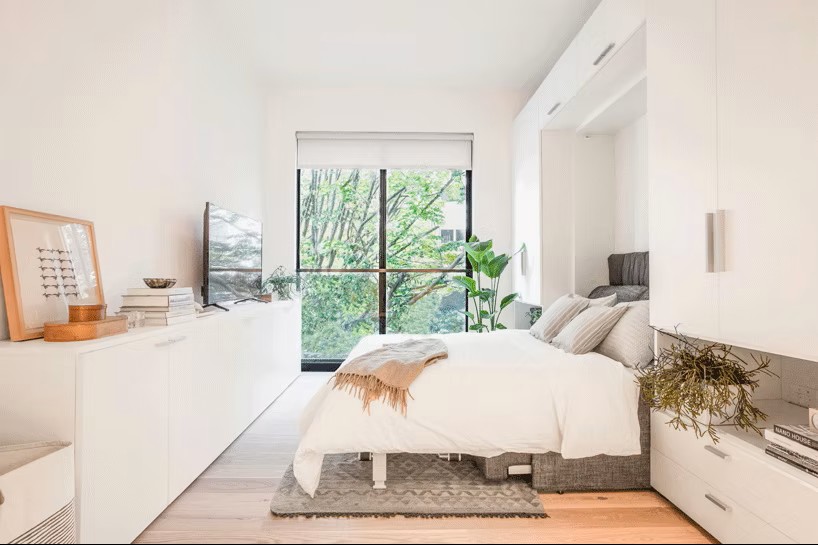
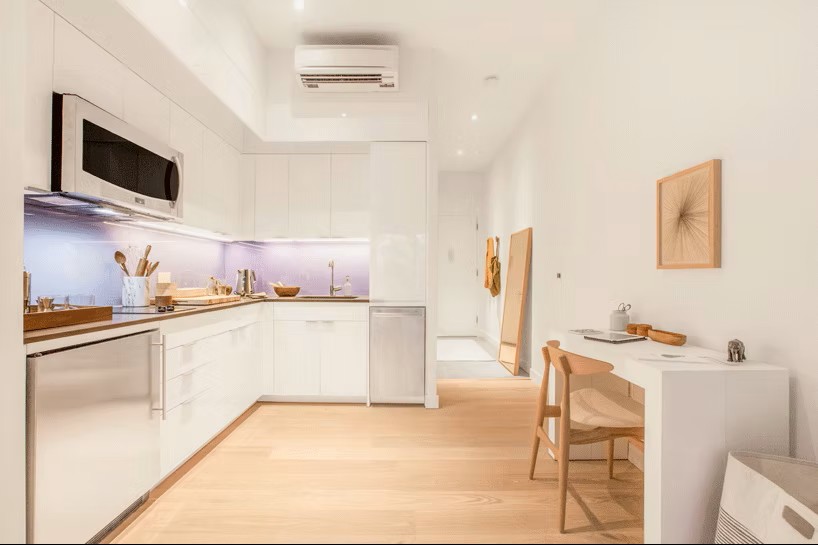
Enter the “junior one-bedroom”—the micro-apartment’s sophisticated cousin. These units, typically around 450 square feet, use smart design to create distinct zones that make the space feel and function like a much larger apartment.
The game-changing features that are making micro-living actually livable:
- Sliding partitions that create instant privacy
- Mezzanine sleeping lofts that separate sleep from living areas
- Murphy beds and convertible furniture that transform spaces throughout the day
- Shared amenity spaces that extend your living area beyond your front door
These aren’t just space-saving tricks—they’re addressing the psychological challenge of single-room living. When your entire life happens in one room, that room better be brilliantly designed.
Why Micro-Apartments Actually Make Sense in NYC
Unlike other cities where micro-living feels like a compromise, New York City creates the perfect conditions for tiny apartments to not just work, but thrive:
1. The Math Simply Works
When one-bedroom apartments in Manhattan average over $4,000 per month, a well-designed 350-square-foot unit for $2,800 starts looking pretty smart. You’re not just saving money—you’re potentially living in a better neighborhood with superior access to everything the city offers.
2. Location Beats Square Footage
In NYC, your neighborhood is your extended living room. You’ve got world-class restaurants, parks, museums, and entertainment options right outside your door. When Central Park is your backyard and every cuisine imaginable is within walking distance, who needs a big kitchen?
3. The Car-Free Advantage
Most micro-apartment residents don’t own cars (because parking costs more than some people’s rent). This isn’t a sacrifice—it’s a liberation. No car payments, no insurance, no parking nightmares. The money saved often more than offsets the higher per-square-foot rent.
4. Urban Lifestyle Alignment
New Yorkers spend less time at home than residents of any other major city. Work, socializing, entertainment, exercise—it all happens outside the apartment. Your home becomes a beautifully designed retreat rather than a space that needs to accommodate every aspect of your life.
The Economics That Make Everyone Win
For developers, micro-units solve several challenges simultaneously:
- More total units per building means more rental income
- Higher revenue per square foot
- Faster lease-ups due to lower absolute rent prices
- Perfect for adaptive reuse projects and challenging lot shapes
This isn’t about exploitation—it’s about market innovation. When a developer can offer someone a gorgeous apartment in a prime location for $2,500 instead of $4,000, that’s creating housing accessibility, not reducing it.
Navigating the Regulatory Landscape
NYC’s approach to micro-housing regulation shows the city understands the value of this housing type. The AdAPT NYC pilot project in 2013 paved the way for developments like Carmel Place in Kips Bay, proving that micro-units could be both livable and desirable.
Recent housing affordability initiatives include micro-housing as a key strategy for addressing the housing shortage. The city is increasingly offering waivers and incentives for innovative micro-unit projects, especially those using modular or prefabricated construction.
But developers still need to navigate:
- Light and air requirements that ensure units remain comfortable
- Accessibility standards that make buildings inclusive
- Community input processes that address neighborhood concerns
These requirements aren’t obstacles—they’re quality controls that ensure micro-units remain genuine housing solutions rather than just creative ways to pack more people into less space.
The Future of Tiny Living in the Big Apple
The micro-apartment isn’t going anywhere. If anything, it’s evolving into something more sophisticated and responsive to how we actually want to live. Here’s what’s coming next:
1. Flexibility as a Feature
From co-living concepts to hybrid hotel-apartment models, future micro-units will adapt to residents’ changing needs. Think lease terms that can shift from short-term to long-term, or units that can be combined for couples who want more space.
2. Design-Forward Innovation
The bar keeps rising for what micro means. Future units won’t just be smaller—they’ll feel more spacious through clever design, integrated technology, and seamless indoor-outdoor connections.
3. Strategic Location Focus
The most successful micro-developments will continue to focus on neighborhoods where the trade-off between size and location creates genuine value: SoHo, Williamsburg, Long Island City, and Downtown Brooklyn.
The Bottom Line: Small Space, Big Possibilities
New York City doesn’t just tolerate micro-apartments—it makes them desirable. In a city where ambition and opportunity define daily life, a smaller home can mean greater freedom, financial flexibility, and access to experiences that matter.
The micro-apartment revolution is succeeding because it solves real problems for real people:
- Developers get better returns and more efficient land use
- Residents get affordable access to premium neighborhoods
- The city benefits from increased housing density and urban efficiency
This isn’t about accepting less—it’s about redefining what “more” looks like in an urban context. Sometimes living large means living smart, and in New York City, smart often comes in small packages.
Ready to explore micro-living options? The future of urban housing is already here, and it’s smaller, smarter, and more strategic than ever before. Contact us today!
Frequently Asked Questions
Yes. Micro-units typically deliver $4.50-6.00 per square foot in monthly rent compared to $3.50-4.25 for traditional one-bedrooms. Combined with 15-25% higher unit density per buildable square foot and faster lease-up cycles, micro-apartments often outperform traditional unit types on key financial metrics including revenue per square foot and IRR.
Three primary demographic segments drive micro-apartment demand:
- High-income young professionals ($75K-150K annually) in tech, media, and finance who prioritize location over space
- Students and medical professionals near major institutions (NYU, Columbia, hospital systems) seeking proximity to work/study
- Corporate and transitional renters requiring flexible-lease options and furnished accommodations
These demographics offer stable income, low maintenance requirements, and willingness to pay premium rates for prime locations.
Successful micro-apartment developments typically target tenants earning $75,000-150,000 annually. This income range supports the $2,800-3,200 monthly rents that micro-units command in desirable neighborhoods while maintaining healthy rent-to-income ratios.
Current market trends favor “junior one-bedroom” units around 450 square feet over pure studio layouts. These units incorporate intelligent space division—such as sliding partitions, mezzanine sleeping areas, or flexible zones—that command 10-15% rent premiums over basic studios while addressing tenant demand for distinct living/sleeping areas.
Yes. Successful micro-apartment developments compensate for smaller unit sizes with expanded shared amenities that effectively extend living space:
- Coworking areas and private phone booths
- Communal kitchens and dining spaces
- Flexible lounges and entertainment areas
- Rooftop terraces and outdoor spaces
These amenities aren’t just marketing features—they’re essential to the value proposition that justifies premium per-square-foot pricing.