

An Unexpected Afternoon in Astoria
A few weeks ago, we dropped a car off at a repair shop in Astoria and found ourselves with a few unplanned hours to fill. It occurred to us that the Noguchi Museum was a short walk away — a place we hadn’t visited in nearly a decade. What followed was one of those rare afternoons where you go in expecting a pleasant enough visit and come out with your brain genuinely rearranged.
We’re writing about it here because we think the Noguchi Museum is one of the most instructive examples of adaptive reuse architecture in New York City — not because it’s flashy or talked-about in that way, but because it makes a lot of quiet decisions that most projects get badly wrong. If you care about how old buildings get repurposed into something new, this place is worth your time.
Why This Building, and Why Queens
Isamu Noguchi started acquiring property in what is now the Long Island City / Astoria waterfront area in the early 1960s. The neighborhood’s draw was practical: large industrial buildings, proximity to stone and material suppliers, and the kind of quiet that’s genuinely hard to find across the river in Manhattan. He bought a building that had formerly housed a photo engravers’ supply company and began using it as his studio.
Over the following years, he bought adjacent properties as the work demanded more space — including a neighboring gas station that he eventually razed to make room for a museum addition. What started as a working studio became, piece by piece, a full city block. The museum’s footprint today is really a record of that gradual accumulation.
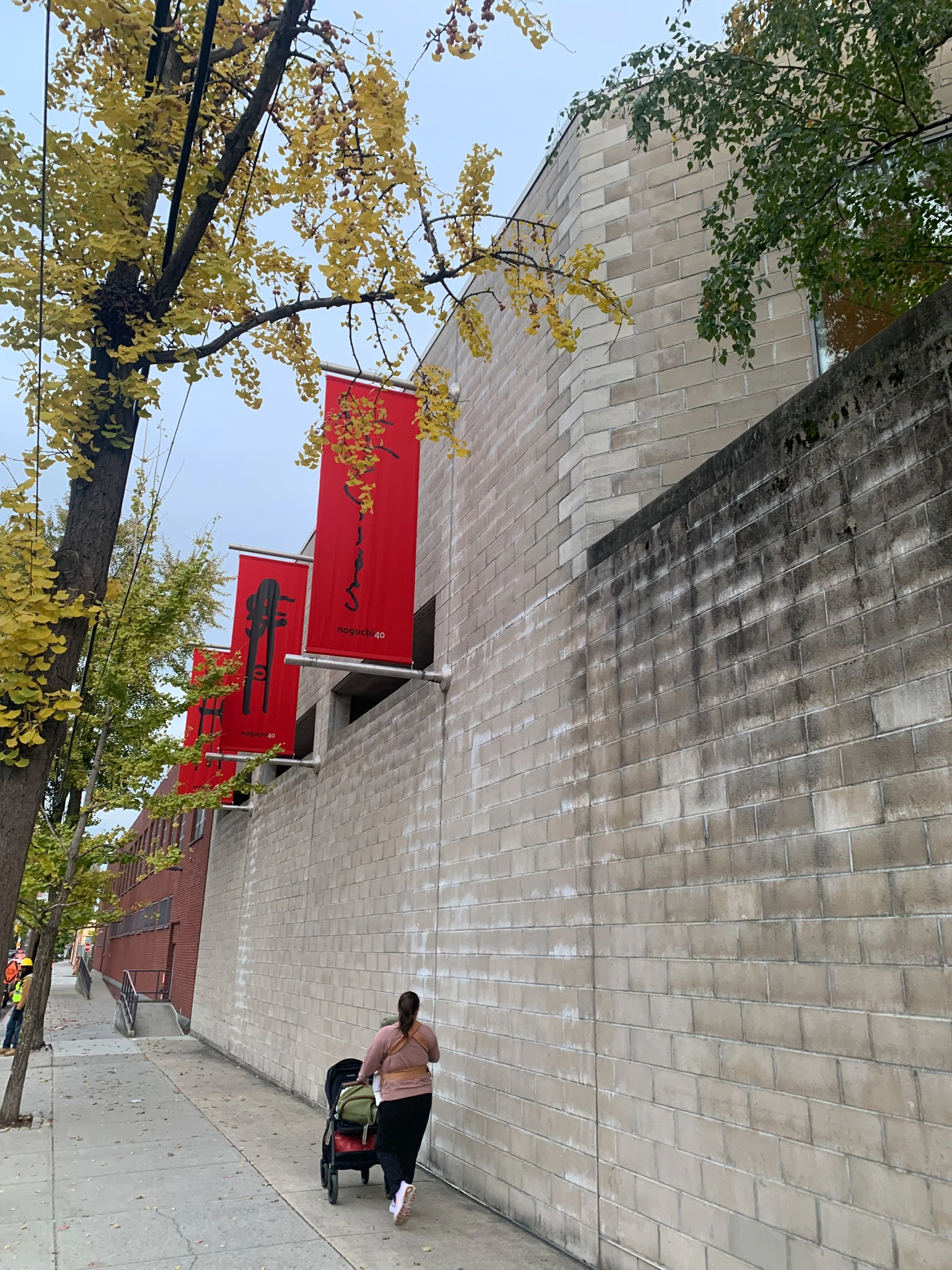
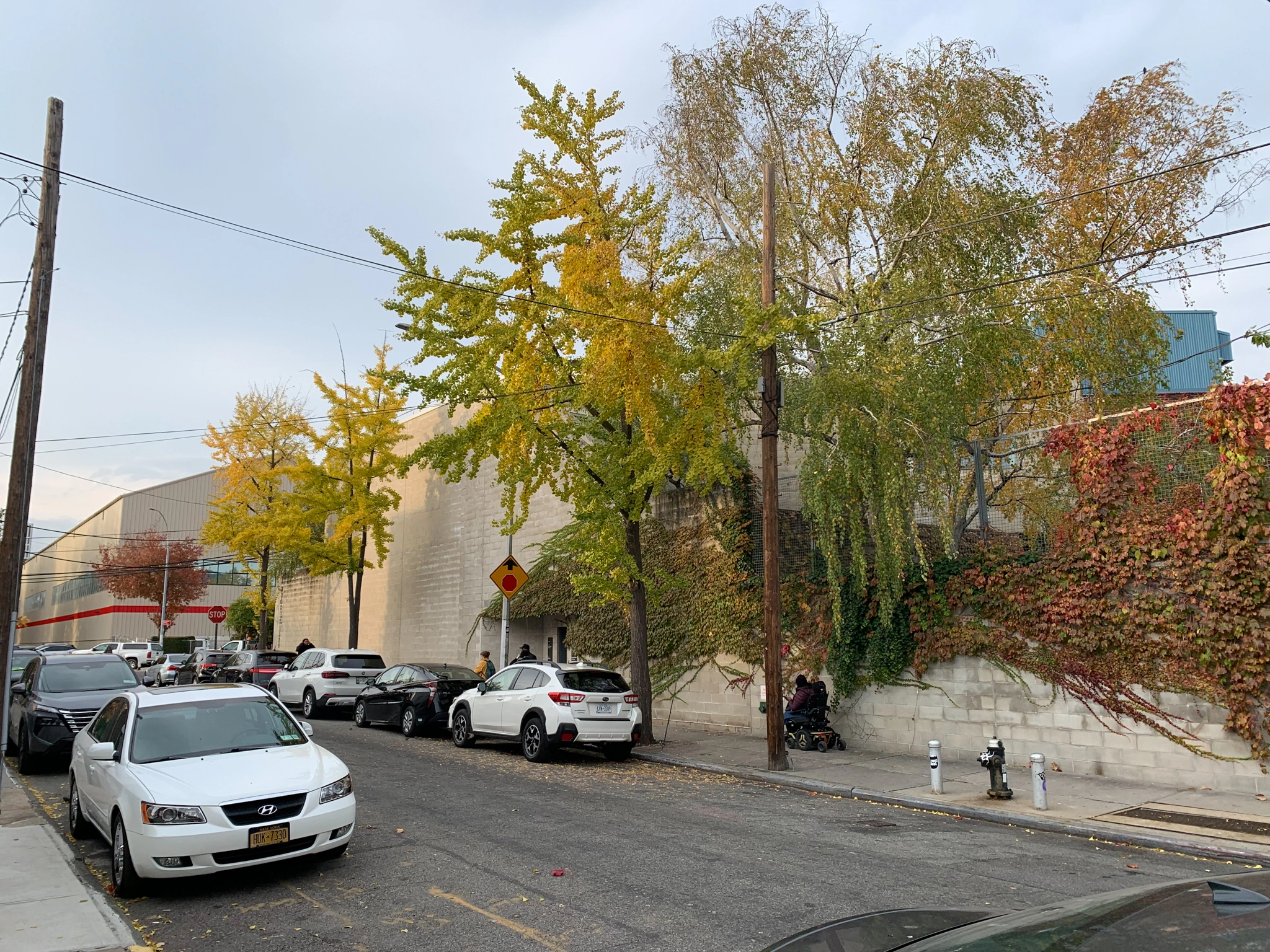
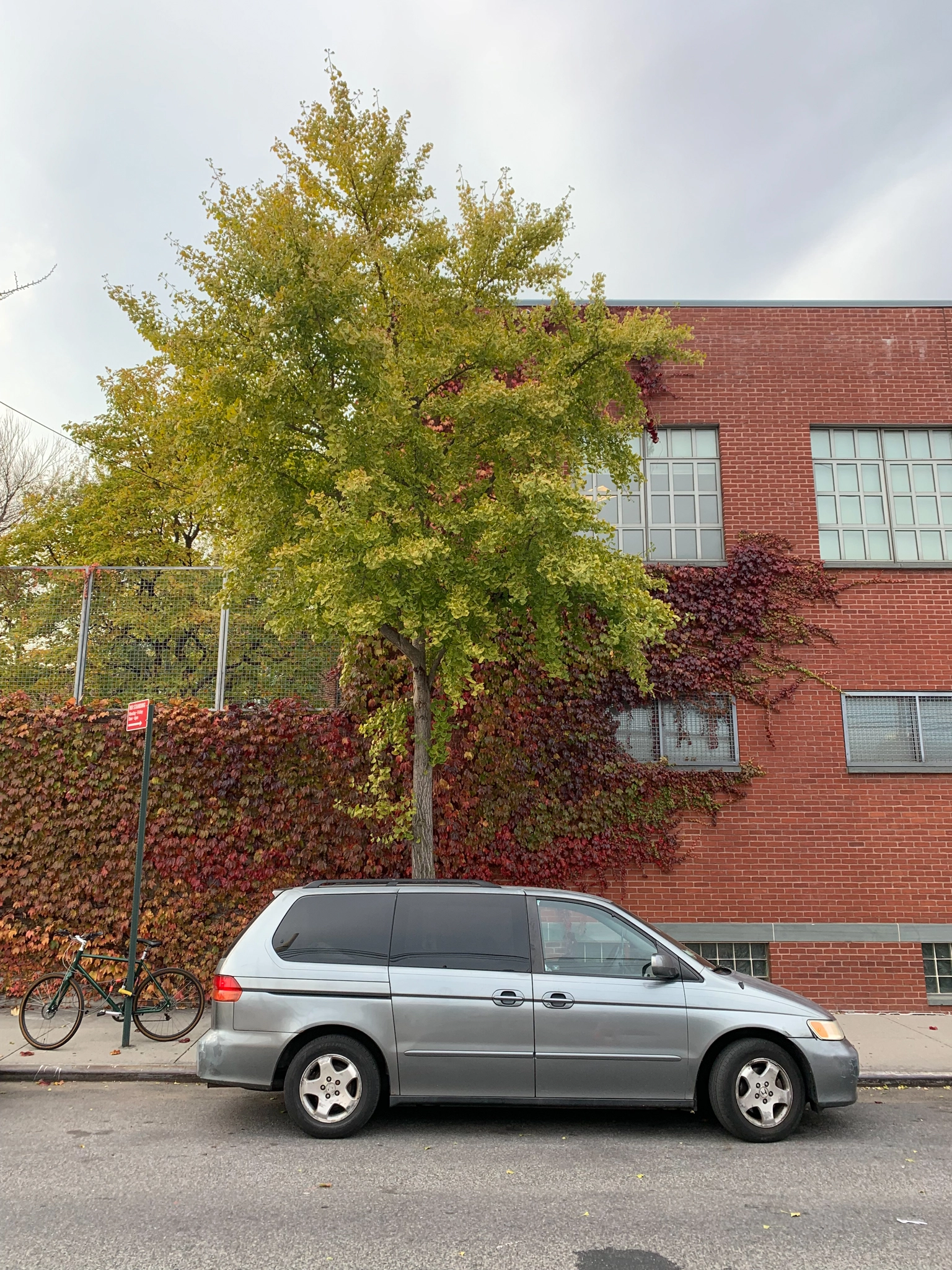
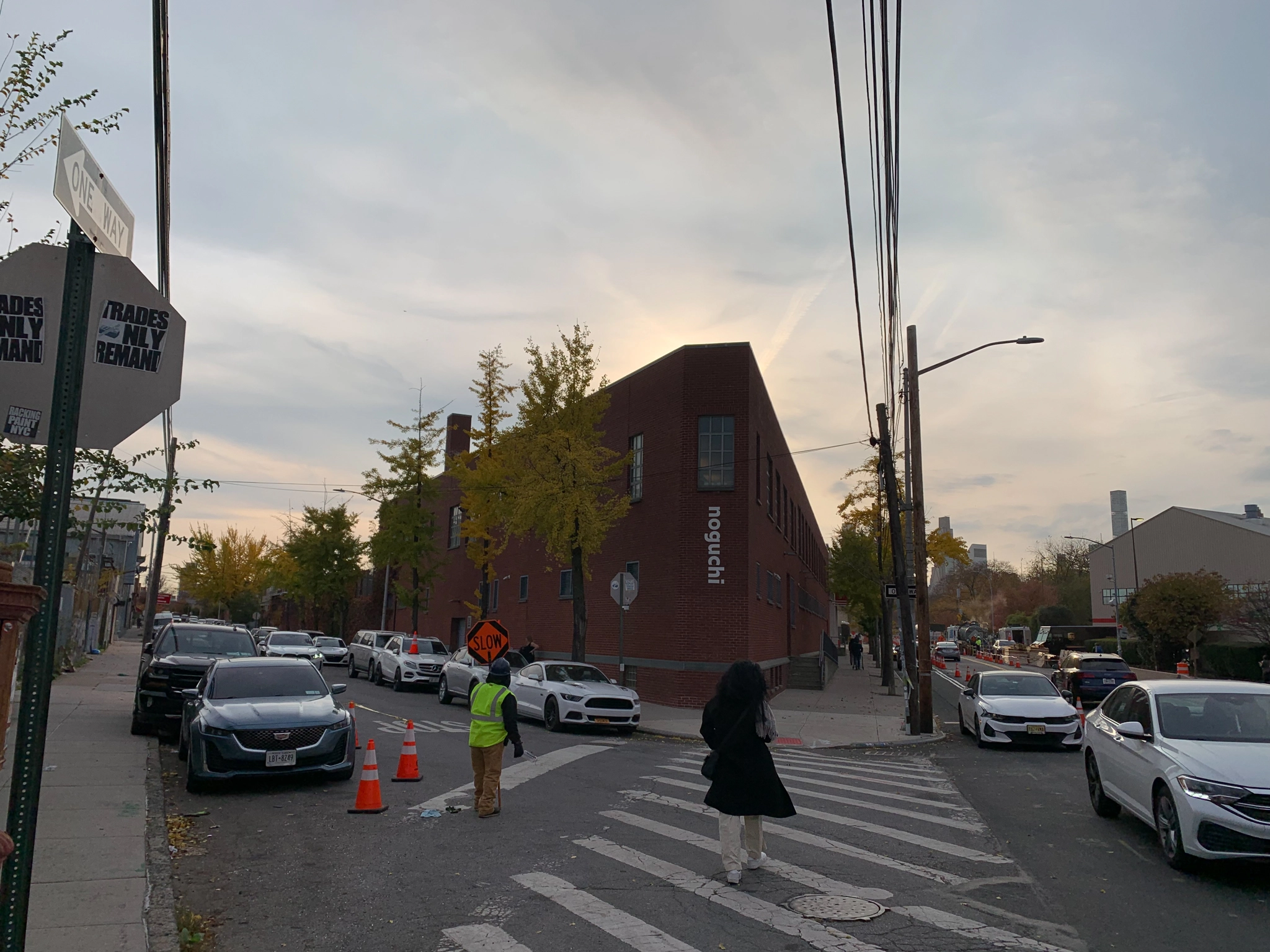
The neighborhood is unassuming, and the building’s street presence reflects that. There’s no marquee, no grand gesture from the sidewalk. You walk up to it and it looks like what it is: a serious industrial building in a quiet part of Queens. That’s entirely appropriate.
Navigating the Permitting Process
The main structure is a large, monolithic red-brick building — solid and industrial, designed with no aesthetic intention whatsoever. Steel columns and girders, open wood joists, visible lateral bracing. The structural logic is purely utilitarian.
Stripping Back to Find the Space
What the renovation largely did was get out of the way. Interior partitions came down, opening up the floor plan and revealing the ceiling structure overhead — an open grid of steel and timber that now serves as a flexible lighting track. Curators can hang accent lighting anywhere within that grid, which means the light can move as the exhibition does. It’s an elegant solution that came directly from not trying to cover up what was already there.
There’s a term in architecture — structural honesty — that describes letting a building’s bones be read rather than concealed. The Noguchi Museum’s original building is a clear example of this done well. The space’s ruggedness is part of the experience. Noguchi made art by shaping stone with his hands in this room; that history is still present in every worn surface.
The Concrete Addition: Building New Without Pretending It’s Old
When it became clear the original building couldn’t accommodate all of his works, Noguchi arranged for a new addition on the razed gas station site. The result is a structure built from reinforced concrete and masonry block — and it makes no attempt to blend in with its brick neighbor. This is the right call, and it’s something we’ve written about directly in our own project work on blending old and new in residential additions.
A Partially Open Ground Floor
The most interesting move in the addition is a partially open first floor — a semi-exterior gallery condition that sits between the enclosed interior and the sculpture garden. Noguchi’s largest pieces occupy a scale somewhere between sculpture and architecture; enclosing them fully would have diminished them. The section of the building — open below, closed above — gives the big works room to breathe and lets visitors circulate around them without feeling compressed.


Why “Matching in Kind” So Often Backfires
In historic preservation and adaptive reuse, one of the oldest debates is whether new additions should try to match the original building’s materials and language. Our position — shaped by projects like our historical renovation work in Westhampton — is that matching in kind is harder to pull off than it looks, and more often than not, the attempt backfires.
The problem is that a new brick wall typically doesn’t look, weather, or settle the same as one built eighty years ago. The materials may come close to matching on day one; within a decade, they read very differently. Worse, the attempt to blend signals a kind of architectural insecurity — an unwillingness to own the fact that this is a different building from a different time.
Stating the Difference Clearly
The Noguchi addition chooses the other path: it commits fully to its own era and construction logic. The concrete and masonry block don’t apologize for not being brick. The contrast creates what we’d call legibility — you can read the building’s history in layers, which is more honest and, ultimately, more interesting. There’s also a practical reason for the choice: material selection driven by structural requirements and what local labor can execute well is almost always a smarter foundation than material selection driven by aesthetics alone.
Interior Renovation: What Structural Honesty Actually Looks Like
Walk into the original brick building and the dominant impression is purposeful restraint. The cleared plan gives the sculptures nothing to compete against. The overhead structure — steel girders, wood joists, diagonal bracing — provides textural depth without distraction, and as noted earlier, doubles as a fully flexible lighting system.
Accessibility Without Apology
A new staircase, accessibility ramp, and elevator have been worked into the building as clearly contemporary additions. They don’t pretend to be original, and they don’t fight with what’s around them. It’s worth noting that the hidden costs of skipping this kind of professional design guidance are real — integrating accessibility into an older structure is genuinely complex work, and the Noguchi Museum handles it well.


The Sculpture Garden as a Third Kind of Space
The remainder of the block is given over to an expansive sculpture garden, and it earns its place in the composition. It’s not a transition space or an afterthought — it’s the connective tissue that allows the two very different buildings to coexist without friction. Move from the concrete addition through the garden to the original brick building (or the reverse), and the shift feels natural rather than jarring.
Several permanent works are displayed in the garden, and the programming keeps the space genuinely active: live music, meditation sessions, open visiting hours. It’s one of those outdoor spaces that manages to feel contemplative and alive at the same time, which is harder to achieve than it sounds.
Noguchi’s Work Through an Architect’s Eye
Noguchi wasn’t trained as an architect, but his work has a spatial intelligence that reads clearly if you’re looking for it. The organic, biomorphic forms — acutely sensitive to weight, void, and surface — carry within them the kind of spatial thinking that translates directly into buildings and landscapes. Standing in front of his pieces, we kept finding ourselves reading parti diagrams: the essential formal gestures from which a design might grow.
The tension between his organic forms and the rectilinear architecture housing them is one of the exhibition’s most productive qualities. The orthogonal logic of the brick, concrete, and steel provides a backdrop that makes the lifelike quality of the sculptures more vivid. Neither element would be as strong without the other. We came to see the museum; we left thinking about our own projects.


Closing Thoughts
We’ve written before about the difference between preservation that celebrates a building’s history and preservation that nervously papers over it. The Noguchi Museum is a clear example of the former. The industrial bones are still there, the material honesty is still there, and the additions — both the concrete museum wing and the small contemporary interventions inside — own their own moment in time rather than trying to disappear into someone else’s.
It’s worth visiting if you haven’t been, or if it’s been a while. Go on a weekday if you can; the garden especially benefits from a little quiet. And if you happen to be dropping a car off somewhere nearby, consider it a happy accident.


Frequently Asked Questions
Adaptive reuse architecture is the practice of repurposing an existing building for a use significantly different from its original intent — factories become galleries, warehouses become apartments, industrial buildings become museums. In New York City, where construction costs are high and historic building stock is dense, adaptive reuse is often the most practical and culturally resonant path forward. Done well, it preserves the material memory of a place while making it functional for a new generation.
The Noguchi Museum is located at 9-01 33rd Road in Astoria / Long Island City, Queens. The N/W trains stop at Broadway in Astoria, roughly a ten-minute walk away. It’s a manageable trip from most of Manhattan.
What’s the difference between the original building and the concrete addition at the Noguchi Museum?
The original structure is a red-brick former industrial building that Noguchi used as his working studio from the 1960s onward. The concrete addition was built later on an adjacent site (a former gas station) to accommodate larger-scale sculptural works. The two buildings are deliberately different in material and construction logic — a choice that reflects the contrast strategy in historic preservation rather than an attempt to match the older building.
Not necessarily. Matching in kind can work well when materials are genuinely available and the craftsmanship can be replicated — but it frequently produces results that read as inauthentic within a few years of weathering. A clearly contemporary addition that acknowledges the original building while stating its own era can be a more honest and durable solution. We’ve encountered this question directly in our historical renovation projects, where hidden conditions in older buildings often force material decisions that weren’t in the original plan.
Yes — and not only for the sculptures. The building itself is a sustained lesson in adaptive reuse, material contrast, structural honesty, and the management of indoor-outdoor transitions. The sculpture garden adds a third experiential register that most museums don’t have. For anyone working in architecture, interiors, or landscape design, a visit rewards close attention.
The sculpture garden is actively programmed with live music, meditation sessions, and community events. The museum also offers rotating temporary exhibitions and educational programming. It operates more like a living cultural institution than a static archive, which is part of why it holds up over multiple visits.