

If you’ve been noticing that new homes seem smaller, outdoor spaces a little less elaborate, and accessory dwellings popping up more often, you’re not imagining it. The American Institute of Architects’ (AIA) 2025 Q2 Home Design Trends Survey offers a clear snapshot of how home and property design is shifting—and it’s a telling reflection of both changing lifestyles and economic pressures.
This quarter’s focus on home renovation trends moves beyond kitchens and baths to look at the bigger picture: overall home size, layouts, exterior features, and property characteristics. What emerges is a mix of innovation, adaptation, and a willingness to make do with less—especially in the entry-level market.
Home Size: A Tale of Two Markets
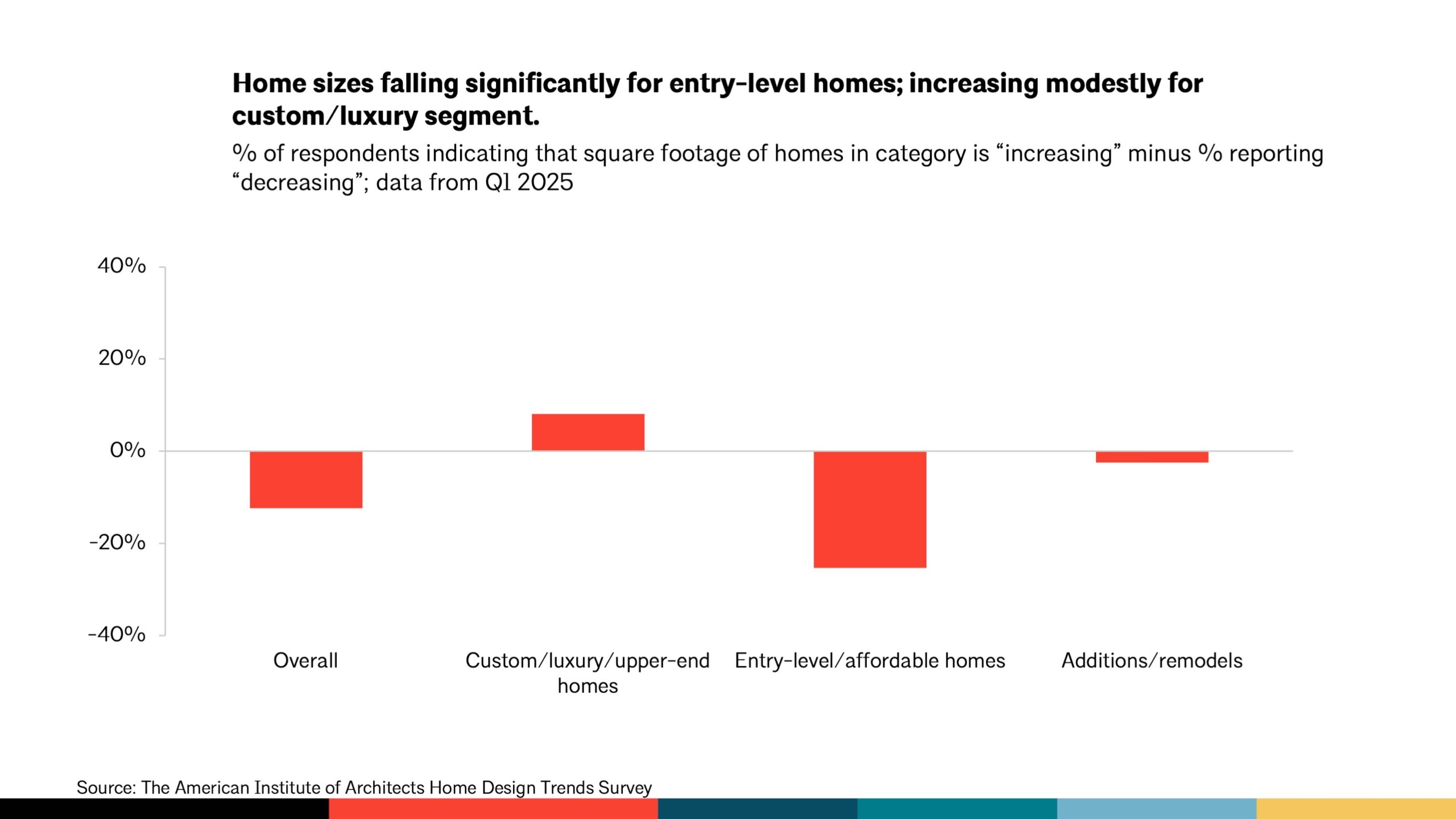
The survey results paint a split-screen picture. Entry-level and affordable homes continue to shrink, with 25% of architects reporting smaller floor plans in this category. In contrast, custom and luxury homes saw a modest increase in size, with 8% of architects noting growth.
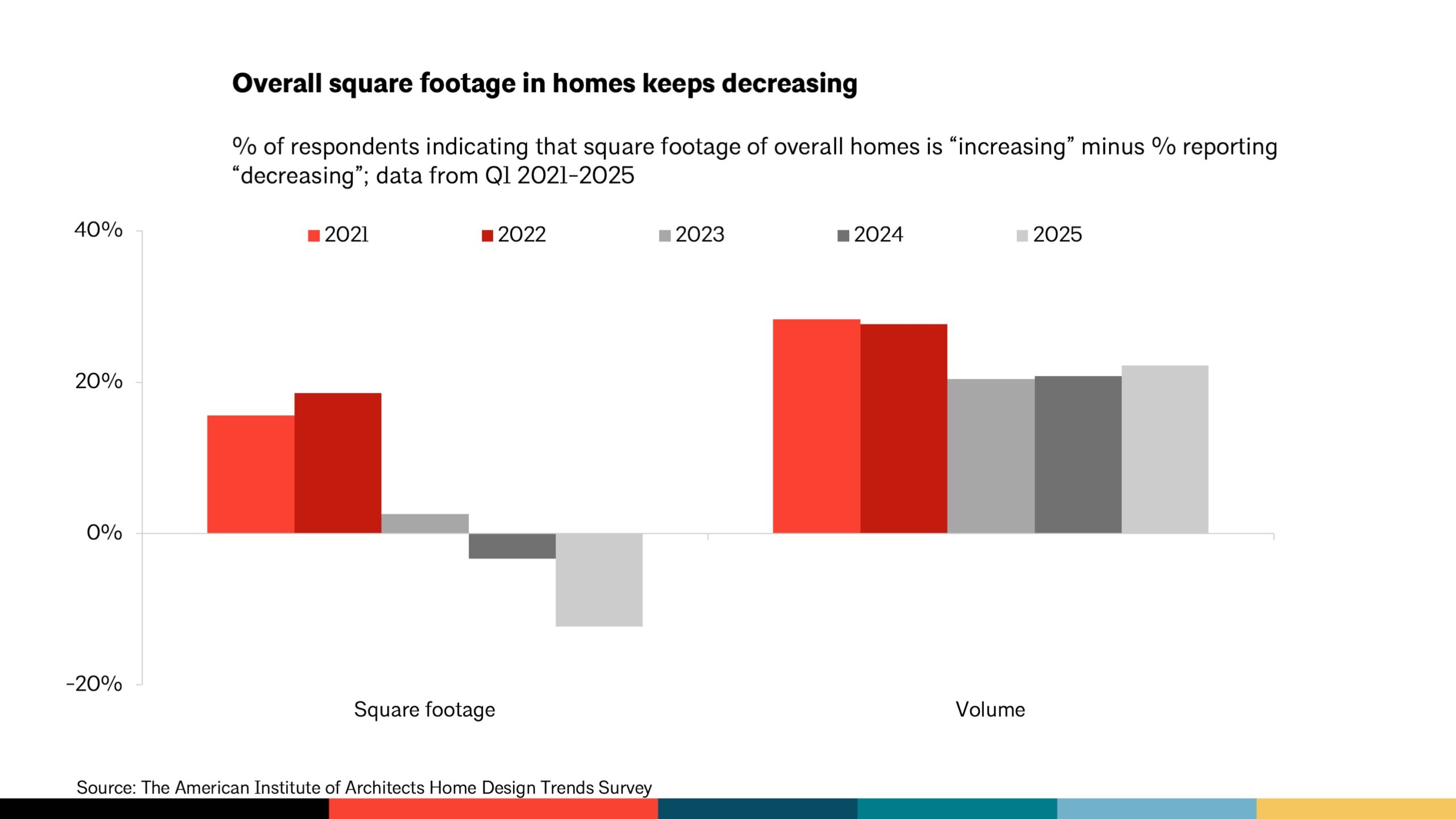
Overall, home sizes are trending downward—not just in new builds but also in additions and remodels. While smaller footprints can encourage smarter design, they also signal the reality that many homeowners are working within tighter budgets and rising housing costs.
The Rise of ADUs, Rentals, and Micro Housing
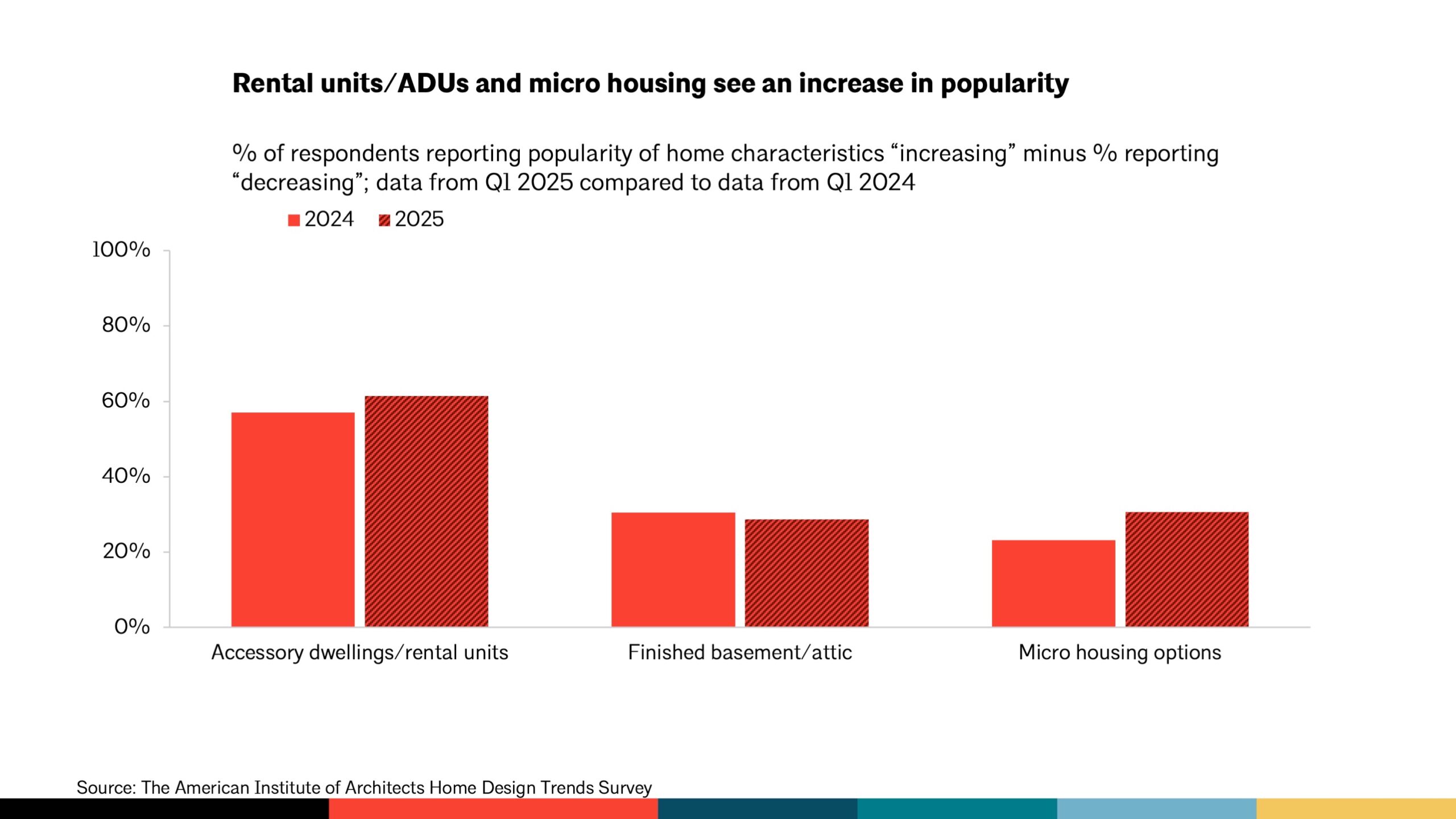
Not all the news is about loss—some of it’s about opportunity. Accessory Dwelling Units (ADUs) and rental units are more popular than ever, rising from 57% to 62% of architect reports in just one year. Micro housing options have also climbed, now showing up in 31% of projects.
For many, these small-scale, secondary dwellings are a practical way to create extra income, house extended family, or provide more flexible living arrangements without the cost of moving.
Accessibility Takes a Step Back
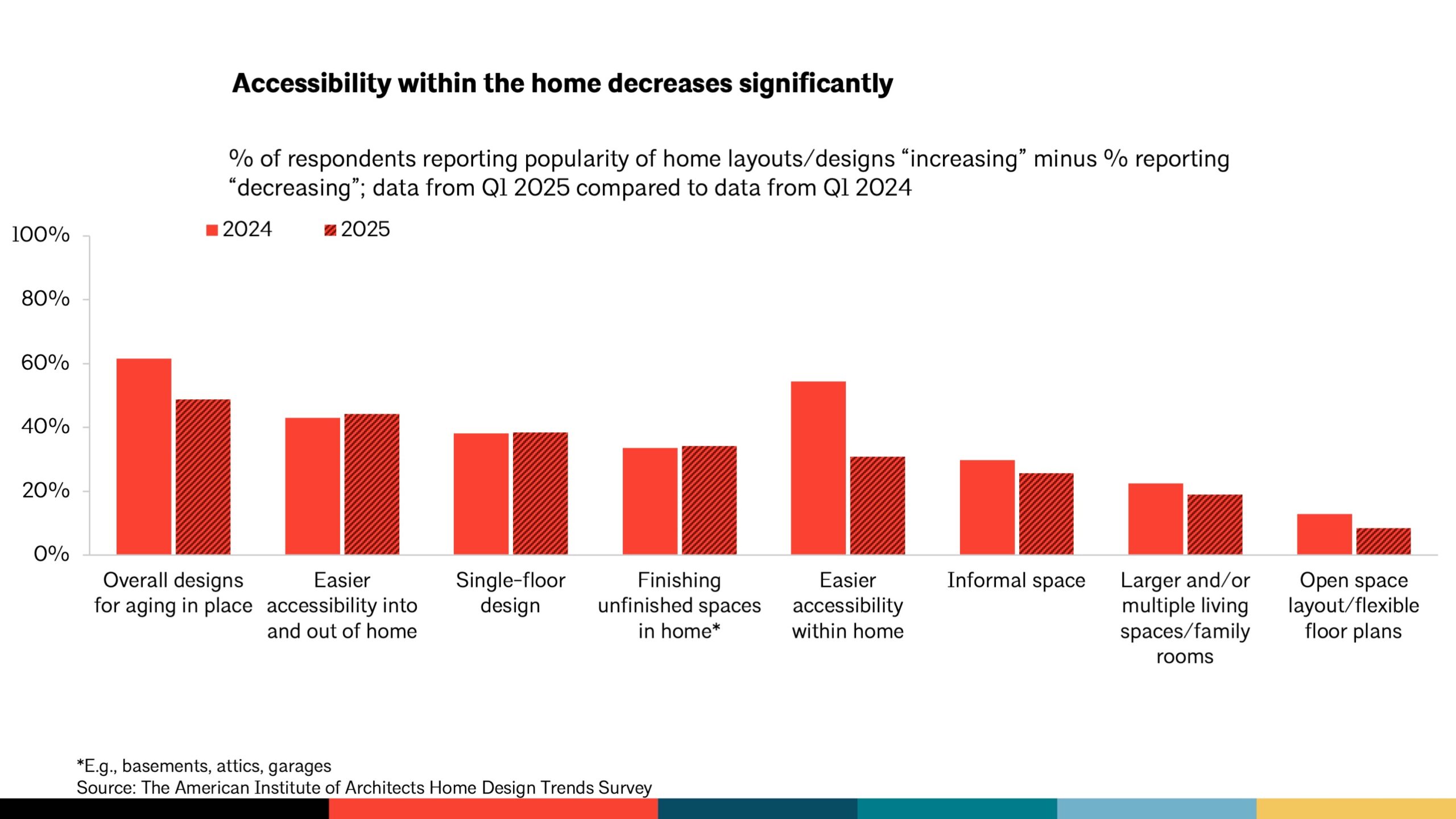
One surprising shift is a decline in accessibility features within the home. Designs for aging in place fell from 62% to 49%, and interior accessibility features dropped sharply from 54% to 31%. This runs counter to the long-term demographic trend of an aging population, but budget constraints and smaller lot sizes may be pushing these upgrades to the back burner.
The exception? Easier access into and out of the home and single-floor layouts saw slight increases, suggesting that while full accessibility isn’t always prioritized, basic ease of movement is still on homeowners’ minds.
Outdoor Spaces: Still Desired, But Dialed Back
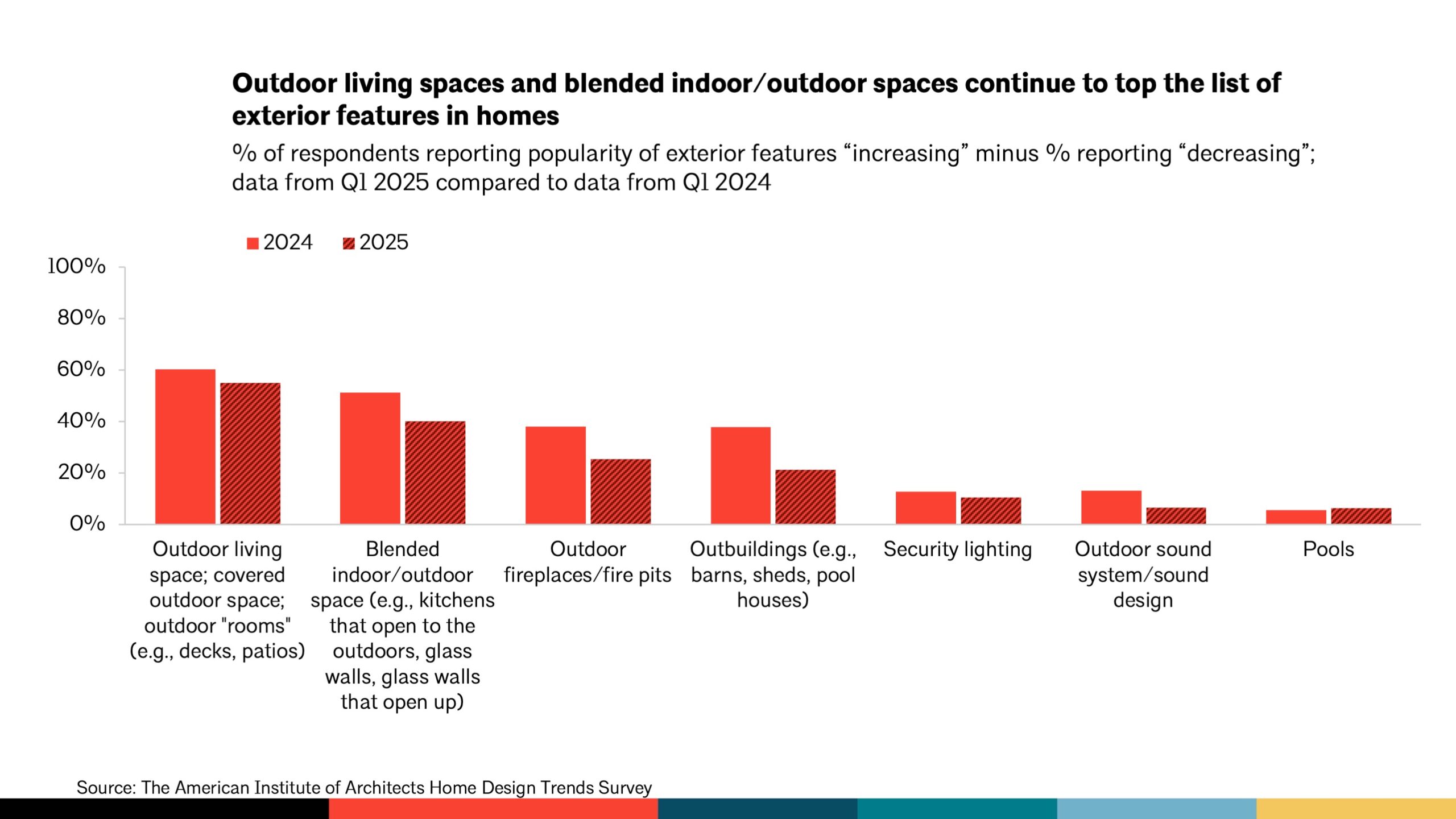
In recent years, outdoor living has been one of the most talked-about home renovation trends—but 2025 shows a subtle retreat. Outdoor “rooms” dropped from 60% to 55%, and blended indoor/outdoor spaces saw an even sharper decline, falling from 51% to 40%.
Fire features like fireplaces and fire pits fell dramatically, from 38% to 21%, possibly influenced by wildfire concerns in certain regions. Other outdoor amenities such as sheds, barns, and pool houses also dipped, reflecting the current economic squeeze.
Smaller Lots, Higher Density
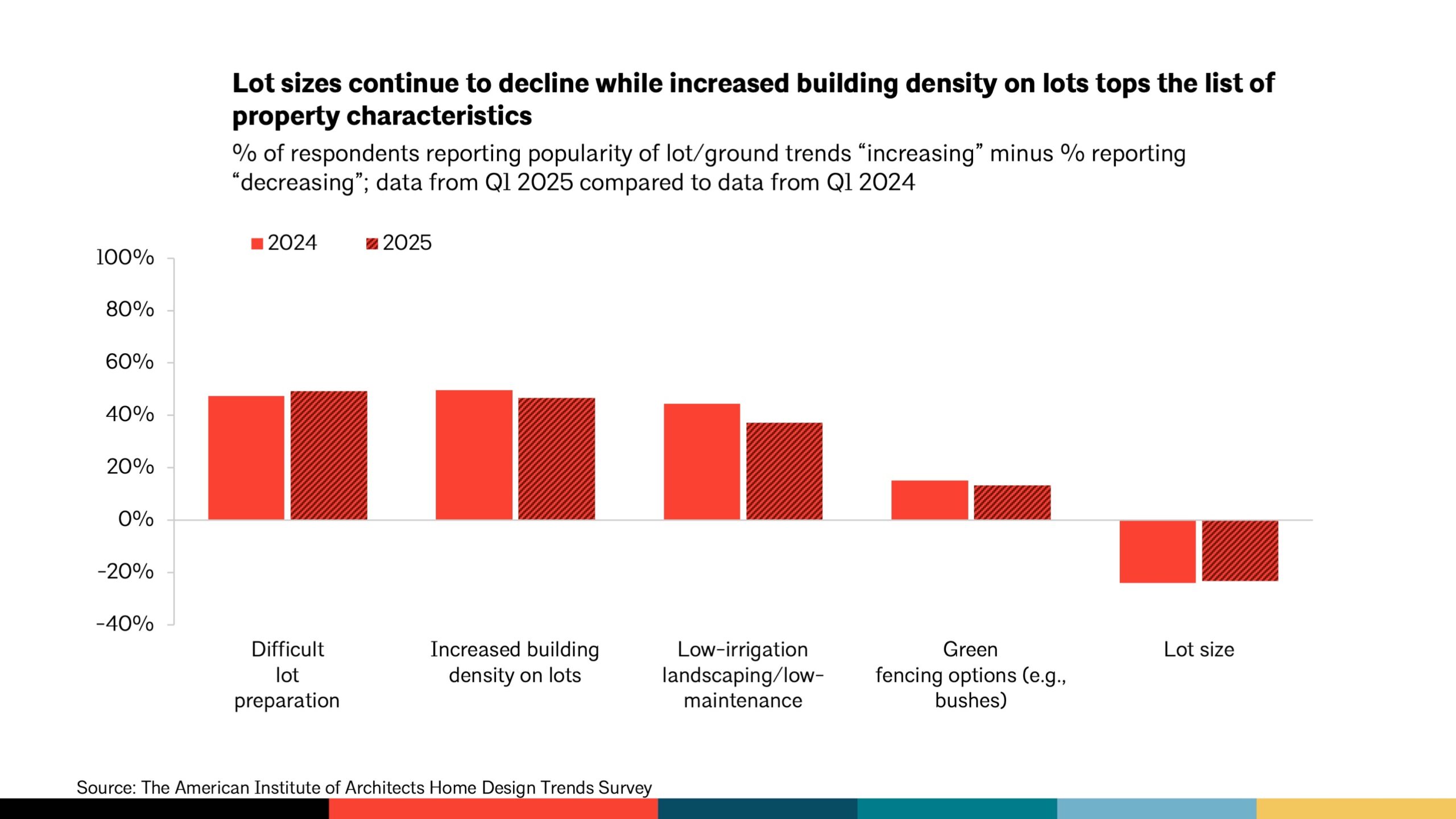
Lot sizes are continuing their downward trend, with 23% of architects reporting decreases in 2025. At the same time, building density is topping the list of property characteristics—meaning homeowners are making the most of limited space.
Low-irrigation landscaping also saw a drop, suggesting that while sustainability remains important, some eco-friendly upgrades are being deferred in the face of other priorities.
Economic Realities Behind the Design Choices
The numbers make it clear: first-time and affordable home buyers are struggling the most, with a 53% decrease in project activity in this segment. Move-up homes also saw a steep decline.
On the other end of the spectrum, custom and luxury homes nudged into positive territory, and certain segments like condos, townhomes, and some remodeling categories remain steady or growing—albeit at slower rates than in previous years.
What This Means for Homeowners
If you’re considering a renovation or new build, these trends are more than just industry data—they’re a glimpse into how people are adapting to current economic and lifestyle realities.
From smaller footprints to the rise of ADUs, the 2025 Q2 home renovation trends suggest a move toward more intentional, flexible, and financially strategic design decisions. The focus is shifting from “bigger is better” to “better is better.”
Thinking about how these trends could work for your property? Our team specializes in creating homes that adapt to today’s challenges while enhancing your long-term comfort and value. Let’s start planning your next project. Contact us today